Culture and Leisure Activities
The Rochow Cultural Ensemble in Reckahn – Educational history in a rural setting

Historical Reckahn
The Reckahn estate belonged to the extended family von Rochow, one of the oldest noble families in the Mark Brandenburg. Around 1400, Reckahn was named as the property of the Reckahn line of the von Rochow family. The present guest house was built 200 years later as the old manor house with a Renaissance gable.
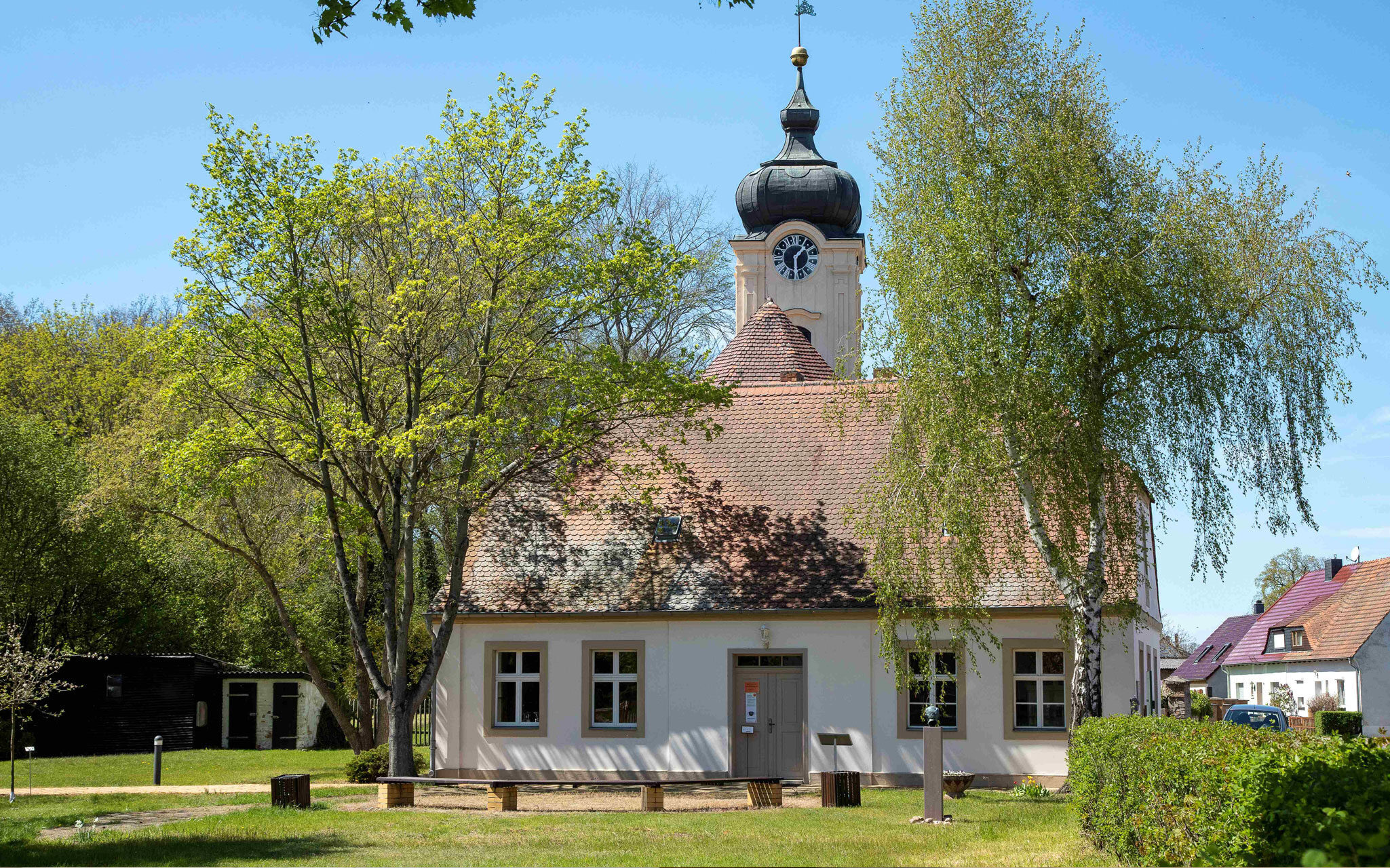
As a new residence and centre of the Reckahn estate, a new manor house was built in 1730, which today houses the Rochow Museum.
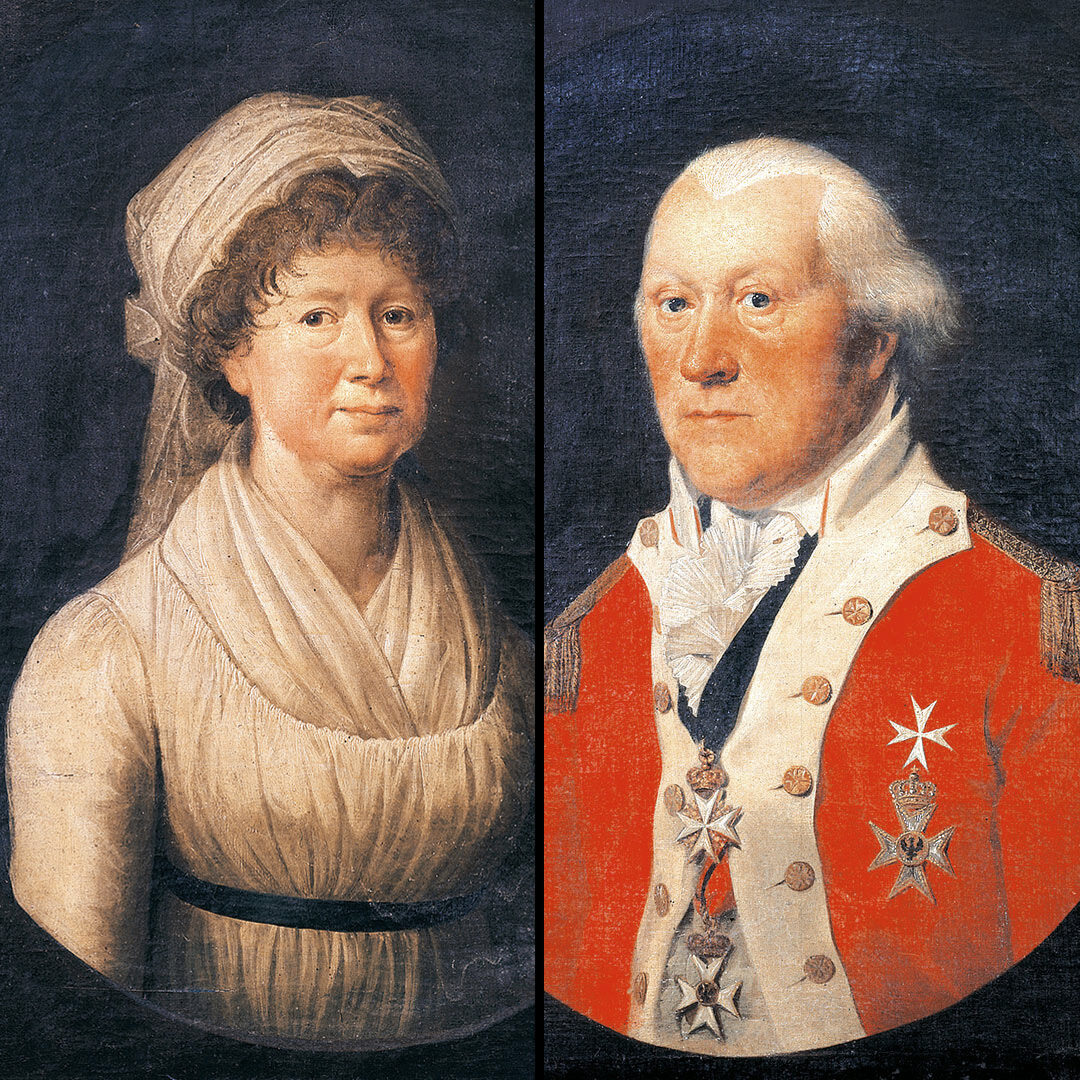 At the end of the 18th century, Friedrich Eberhard (1734–1805) and his wife Christiane Louise von Rochow (1734–1808) lived in Reckahn. Their reforms brought about lasting improvements in the education of the rural population and in the agricultural production. They cultivated a large network of contacts, enjoyed hosting guests and travelled extensively themselves. Thanks to them, the Reckahn estate became a central meeting place for the European Enlightenment.
The oldest German elementary school primer celebrates its 250th anniversary in 2026: ‘Der Kinderfreund. Ein Lesebuch zum Gebrauch in Landschulen’ (The Children’s Friend: A Reader for Use in Rural Schools). It was written by Friedrich Eberhard von Rochow himself.
The Reckahn Museums
The life and work of the von Rochows, lord and lady of the manor, can be explored in many ways at the Rochow Cultural Ensemble in Reckahn.
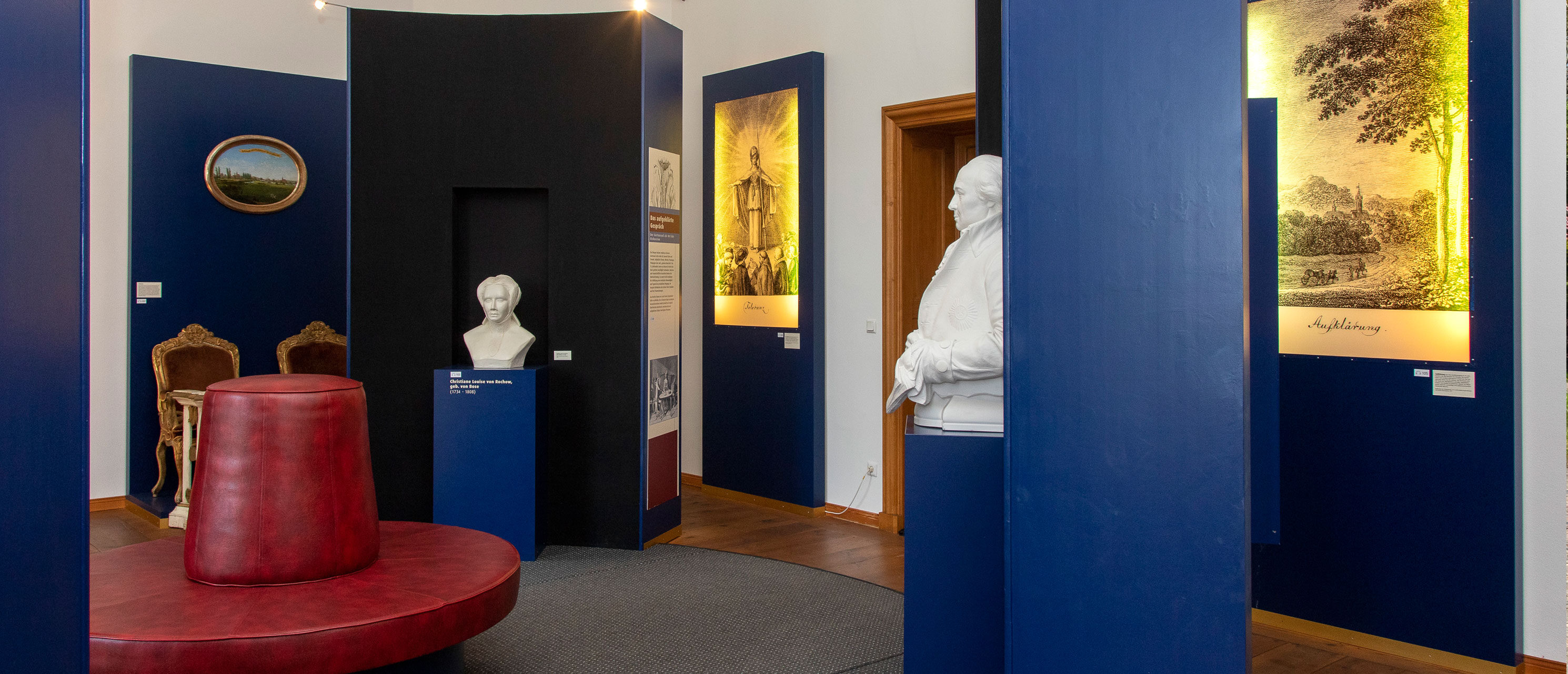
The Rochow Museum in the manor house presents the life stages of Friedrich Eberhard and Christiane Louise von Rochow. It provides insight into the development and spread of their reforms in the fields of rural education and agriculture.
In the ‘Denklehrzimmer’ (a classroom for playful, hands-on learning), for example, visitors can learn about the special educational methods of the so-called philanthropists of the Enlightenment period in a practical way.
The School Museum is located in the old school house dating from 1773. It commemorates the first modern elementary school in Prussia.
The permanent exhibition provides information about the primer ‘Der Kinderfreund’ (The Children’s Friend) (1776/1779), written by Friedrich Eberhard von Rochow. This reader was used throughout Europe for over 100 years.
Other focal points include the progressive teaching methods of Heinrich Julius Bruns (1746–1794) and regional school history up to 1946.
Historical school lessons take place in the old schoolroom on request.
Our guests can explore the Reckahn Museums with a discounted combination ticket and an entertaining audio guide.
You can find more information about the Reckahn museums here.
Cultural Ensemble
In addition to the Rochow Museum and the School Museum, the Reckahn Cultural Ensemble also includes the Baroque church, the estate park with monuments and family burial grounds, as well as the graves of teacher Bruns in the churchyard and the Rochow estate owners in the so-called Neuer Friedhof (new cemetery).
Hiking around Reckahn
Rochow Wanderweg (hiking trail)
• Start and finish: manor house park, Reckahn
• Length: 9,5 km
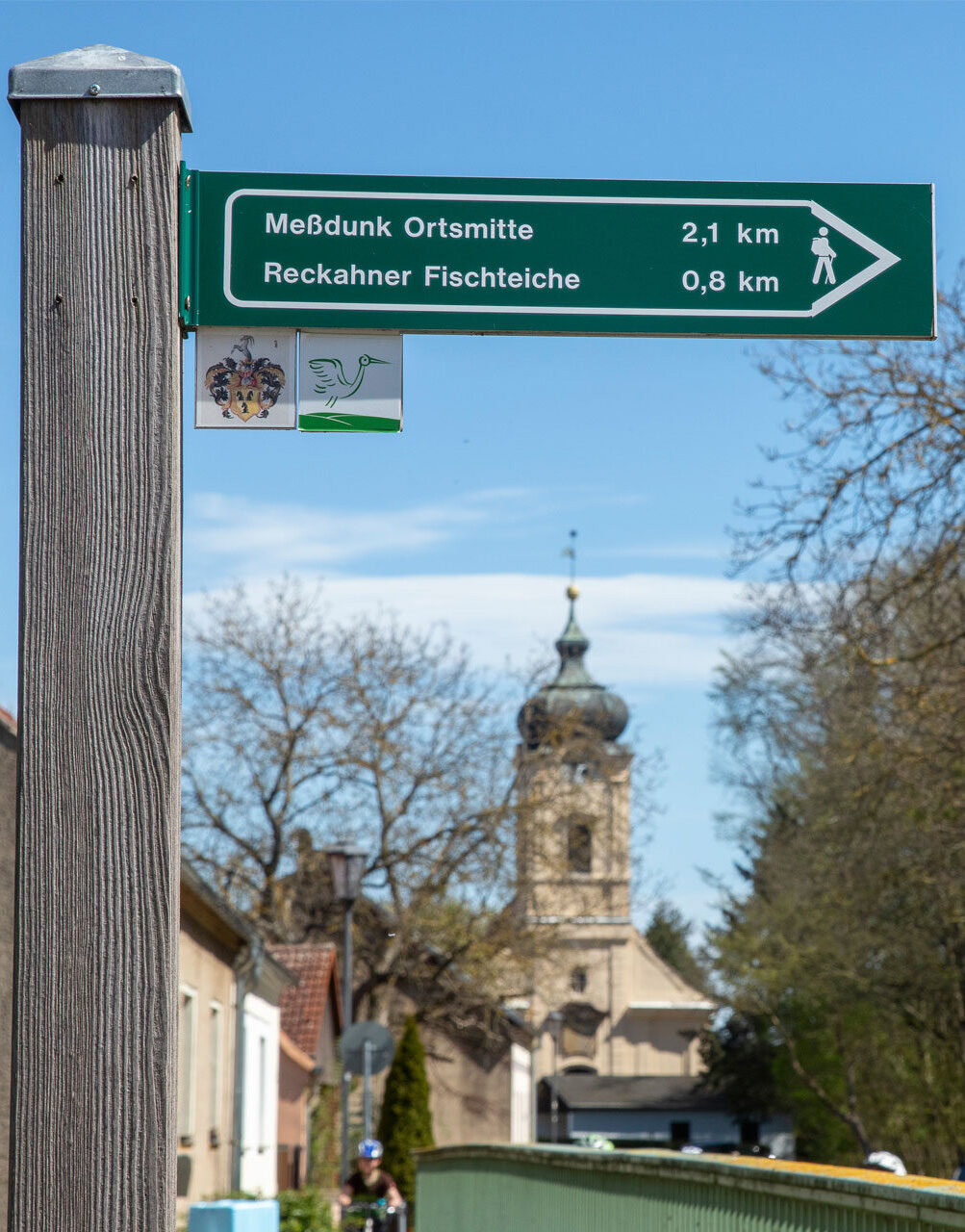
Piktogramm: follow the yellow circle and the Rochow coat of armsThe starting point of the walking trail is the Baroque manor house in Reckahn. Since August 2001, the manor house has been home to the Rochow Museum. The permanent exhibition ‘Vernunft fürs Volk’ (Reason for the People) offers many insights into the work of the enlightened Rochow couple, who were the estate owners.
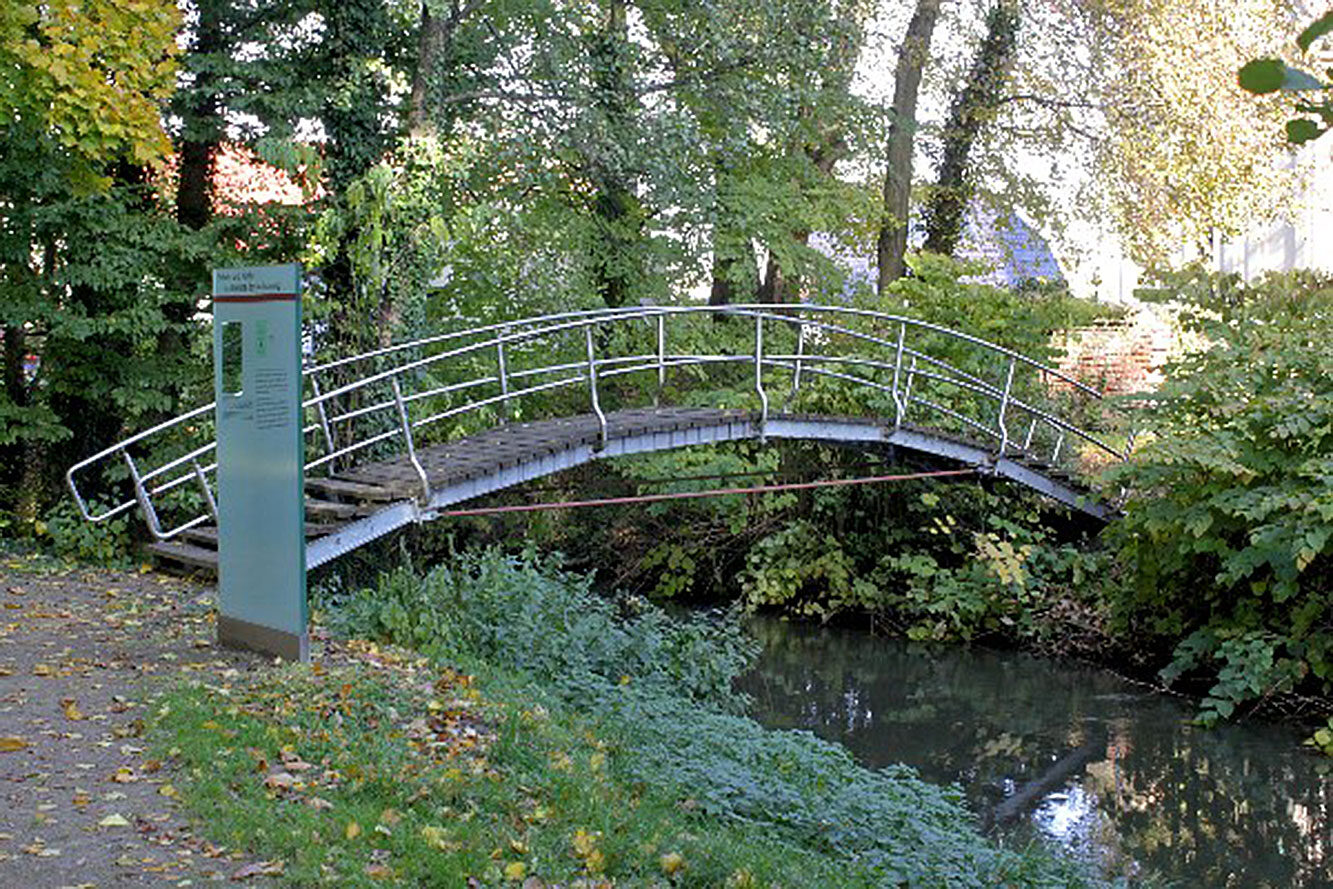
On the way, you pass through the beautiful estate park. After crossing a ditch, you can view the historical Rochow family burial ground from the outside.
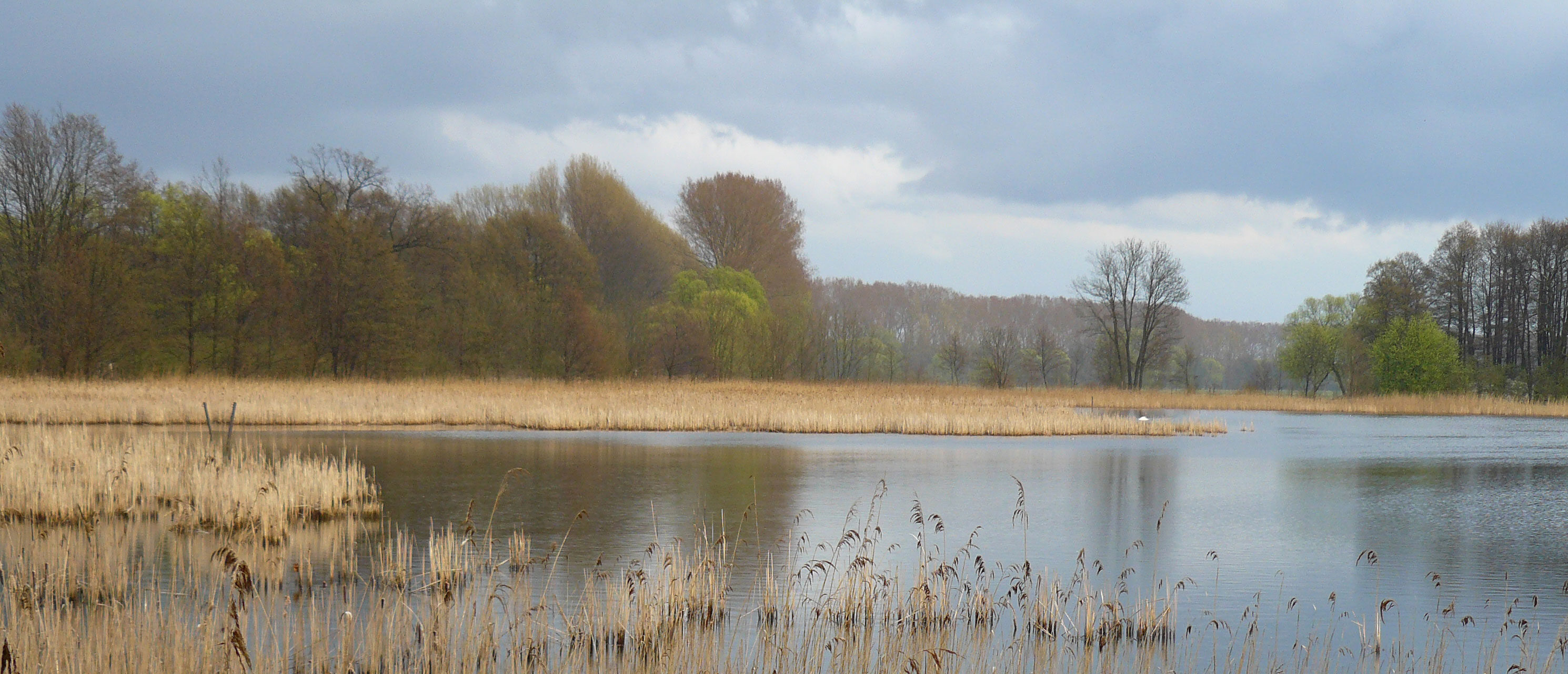
Follow the sign for the village Meßdunk – shady paths await you here. On your left, between the estate park and Meßdunk, there are ponds teeming with fish and birds. In some places, you can observe wild ducks, cormorants, swans, white-tailed eagles, grey herons as well as seagulls at close quarters.
You then reach the little village of Meßdunk with its church, built in 1867. It has not been used for church services since the 1930s but as a cultural venue (JUSTkultur e. V.).
If you follow the quiet road, you will reach Krahne. Along the way, you will pass the memorial stone dedicated to Paul Illmann, the estate forester who was killed just over 100 years ago.
In Krahne, you can visit the church, built in 1904 in the Neo-Baroque style on medieval walls, as well as the former estate (now known as Kunstgut Krahne). Following the signposts through Krahne, you will reach the stone pyramid in memory of the military encampment of Frederick II (1712–1786) held there over several months in 1741, which was erected 50 years later by Friedrich Eberhard von Rochow.
From Krahne, the route takes you back to Reckahn. You will find there, amongst other things, the graves of Friedrich Eberhard von Rochow and his wife Christiane Louise in the old cemetery. You can also visit the Rochow School, which served as a model for the development of primary schools in the 18th and 19th centuries and now operates as a school museum offering historical lessons.
The Baroque church, dating from 1741, is also well worth a visit, as is the grave of the village schoolteacher Heinrich Julius Bruns, who died in 1794, in the adjoining cemetery. A monument was erected in his honour in the estate park in Reckahn.
Places of interest:
- Baroque church in Reckahn
- School Museum in old school house built by Rochow
- Rochow-Museum in the manor house
- estate park
- memorial H. J. Bruns
- Reckahn ponds with bird sanctuary
- church in Meßdunk
- church in Krahne
- stone pyramid
Tips:
A shortcut can be taken on the walk around the Reckahn ponds. To extend the route, you can make a detour to the blue stone in Krahne (approx. 4 km).Catering:
Stop for refreshments at the museum café in Reckahn manor house at the weekend; or buy a snack at the shops in Krahne or at the Wildhof in Reckahn, which are open during the week and on Saturdays.
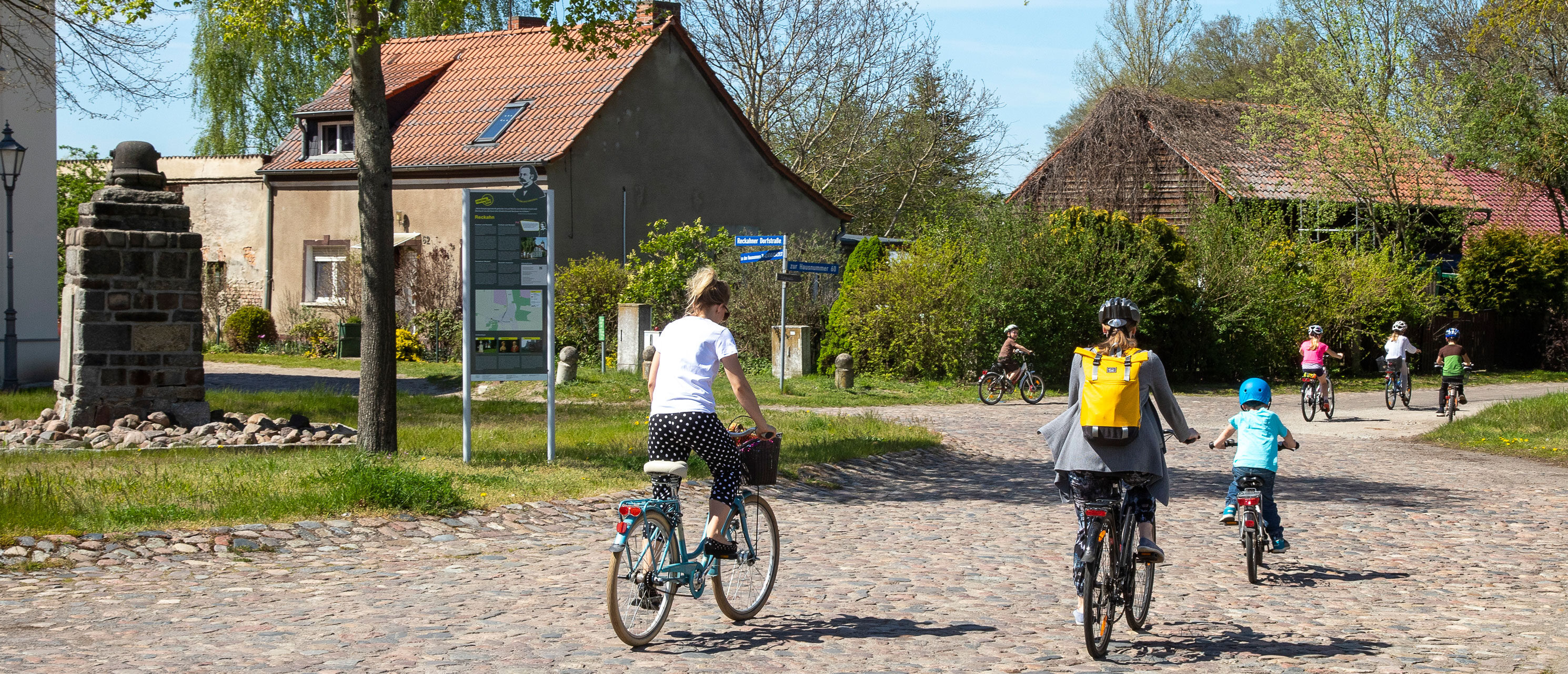
Cycling around Reckahn
Fontane.CYCLE–route
Experience water, culture and Enlightenment on two wheelsStage 7 of the Fontane.CYCLE-route takes you on a circular route of around 32 kilometres from Reckahn via Plaue to Brandenburg an der Havel and back – a scenic day trip full of views of the water and cultural discoveries. The route combines nature, education and history as you follow in Fontane’s footsteps.
With 92 per cent of the route on paved paths and a journey time of around 2.5 to 3 hours, the tour is also ideal for leisure cyclists. ⇓ Download cycle map (PDF)
Noteworthy sights along the way
Reckahn
- War memorial in front of the Old Manor House (guest house) with an information board detailing Fontane’s connections to the von Rochow family,
- The Rochow Museum in the manor house, dedicated to the life’s work of the Enlightenment thinkers Friedrich Eberhard and Christiane Louise von Rochow, with changing exhibitions,
- museum café in the manor house (open on weekends and holidays in the afternoons or by arrangement,
- School Museum – one of the oldest in Brandenburg,
- Baroque church (viewing by arrangement),
- estate park with memorials,
- Reckahn fish ponds and bird sanctuary.
You can take a detour from here to neighbouring Krahne, where the Kunstgut Krahne delights visitors with events, exhibitions and theatre projects.
Plaue
Stop with an idyllic walk around Plaue Castle
https://www.plauehavel.de/sehenswertes/plauer-fontaneweg/schloss-plaue/Brandenburg
- historc city centre
- cathedral
- plenty of places to stop for a bite to eat